
podiatry website design agency
Podiatry Website Design Agency
We're a specialist podiatry website design agency. Our designers and SEO specialists build podiatry websites for practices in Melbourne, Sydney, Brisbane, Perth, Adelaide and across Australia, as a one-off build, not a subscription, with no ongoing monthly SEO fee on top.
A 10-minute clinic website breakdown
Before you invest in another website, watch this
Michael explains how we structure a health clinic website to create more opportunities across Google and AI—and the simple conversion elements many clinic websites overlook.
Search volumes and booking figures shown are illustrative examples only. Results vary depending on your market, competition, website content and implementation.
In this video
- Why one generic service page limits your visibility
- How service, condition and location pages work together
- What we mean by your clinic’s “AI brain”
- The website elements that make booking easier
Want to see this mapped out for your clinic?
Request your free sitemap and homepage mockup.
Get My Free Website MockupRead the video transcript
Michael Coleman: Hello, my name is Michael Coleman and I’m the founder of Local Health Marketing. Welcome to my website. Over the next 10 minutes, I want to show you a little about websites, SEO and the process we use. We won’t be the right fit for every clinic, but I hope you learn something useful today.
Building a deeper clinic sitemap
When we plan a website for a multidisciplinary clinic, we map dedicated pages for its individual services. A typical health website may combine everything on one services page, or have only one page for each discipline. We take the structure further because, as a rule of thumb, each page should have one clear search topic.
For example, people search separately for sports physiotherapy, post-surgical rehabilitation and women’s health physiotherapy. Dedicated pages give Google clearer information about each service and create more relevant opportunities to appear in search. The same principle applies to osteopathy, chiropractic care, remedial massage and the conditions a clinic treats.
Creating your clinic’s “AI brain”
We also create pages around the people a clinic helps—such as active adults, people preparing for surgery, or people using NDIS or other funding pathways. These pages help search engines and AI systems understand the clinic’s services, approach, practitioners and patient groups in greater depth.
I think of this as the clinic’s “AI brain”: a useful, structured body of information that reflects what the clinic does, how it works and who it helps. A simple website gives search engines a limited base to work with. A deeper website creates more relevant entry points before ongoing SEO work even begins.
Designing for easier bookings
A clinic website also needs to make the next step obvious. The Book an Appointment action should be visually prominent, with the phone number still easy to find. Visitors should quickly be able to identify what they need—whether they are in pain, recovering from an injury, using a funding pathway, or trying to move and perform better.
The homepage should clearly introduce the clinic’s services, explain how to get started, show relevant funding options, and help visitors understand their care pathway. Location pages can also make the clinic’s service area clearer to potential patients and support local search visibility. Condition pages help people understand which practitioners or services may be relevant to what they are experiencing.
See the strategy for your clinic
The goal is to invest in the website’s structure and content upfront, creating a stronger foundation for search, AI visibility and conversion. If this approach resonates with you, complete the free mockup form. I’ll research your clinic, map a proposed sitemap and create a homepage concept, then present the thinking to you. Thank you for watching.
Website work
See the websites behind the results
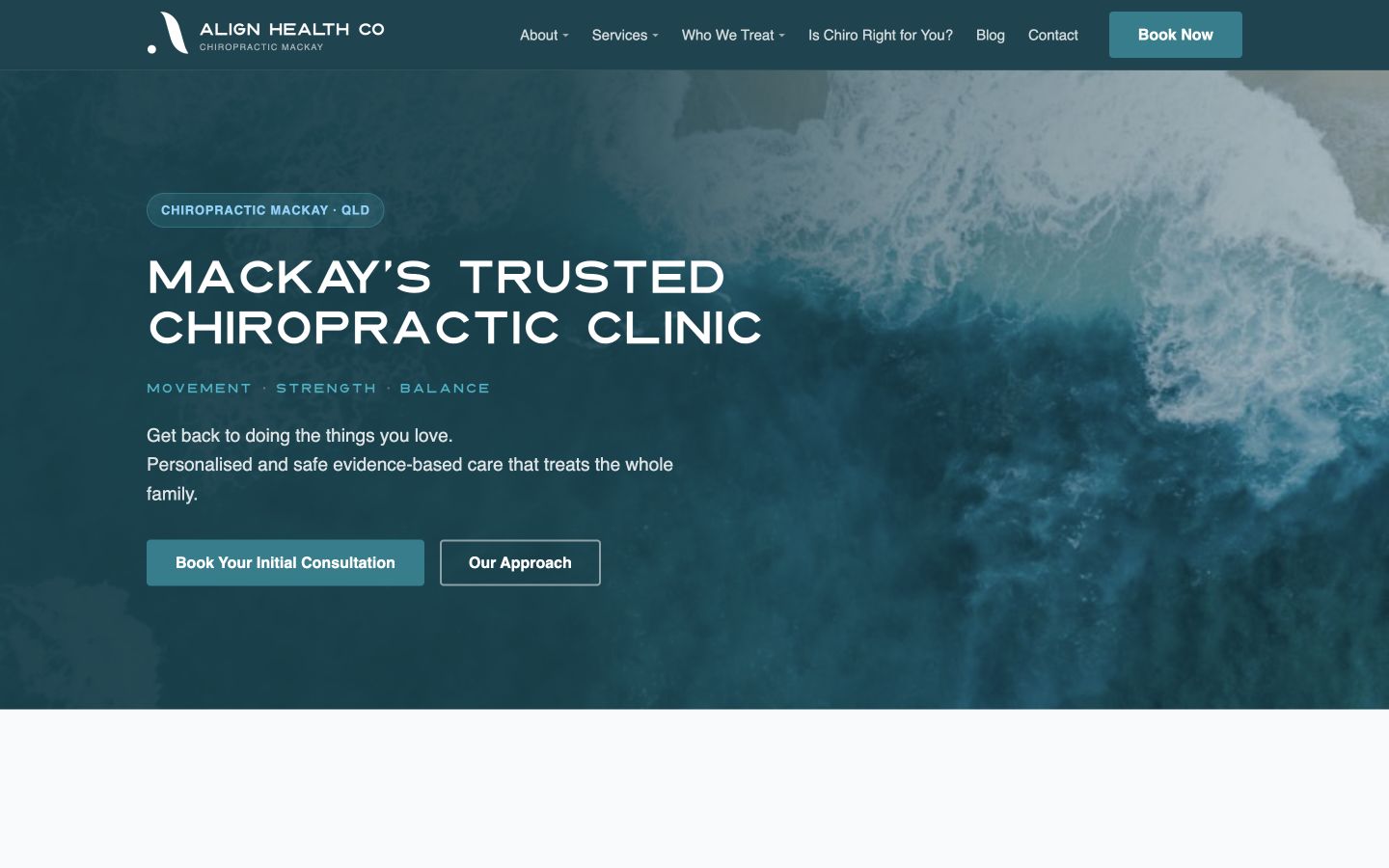
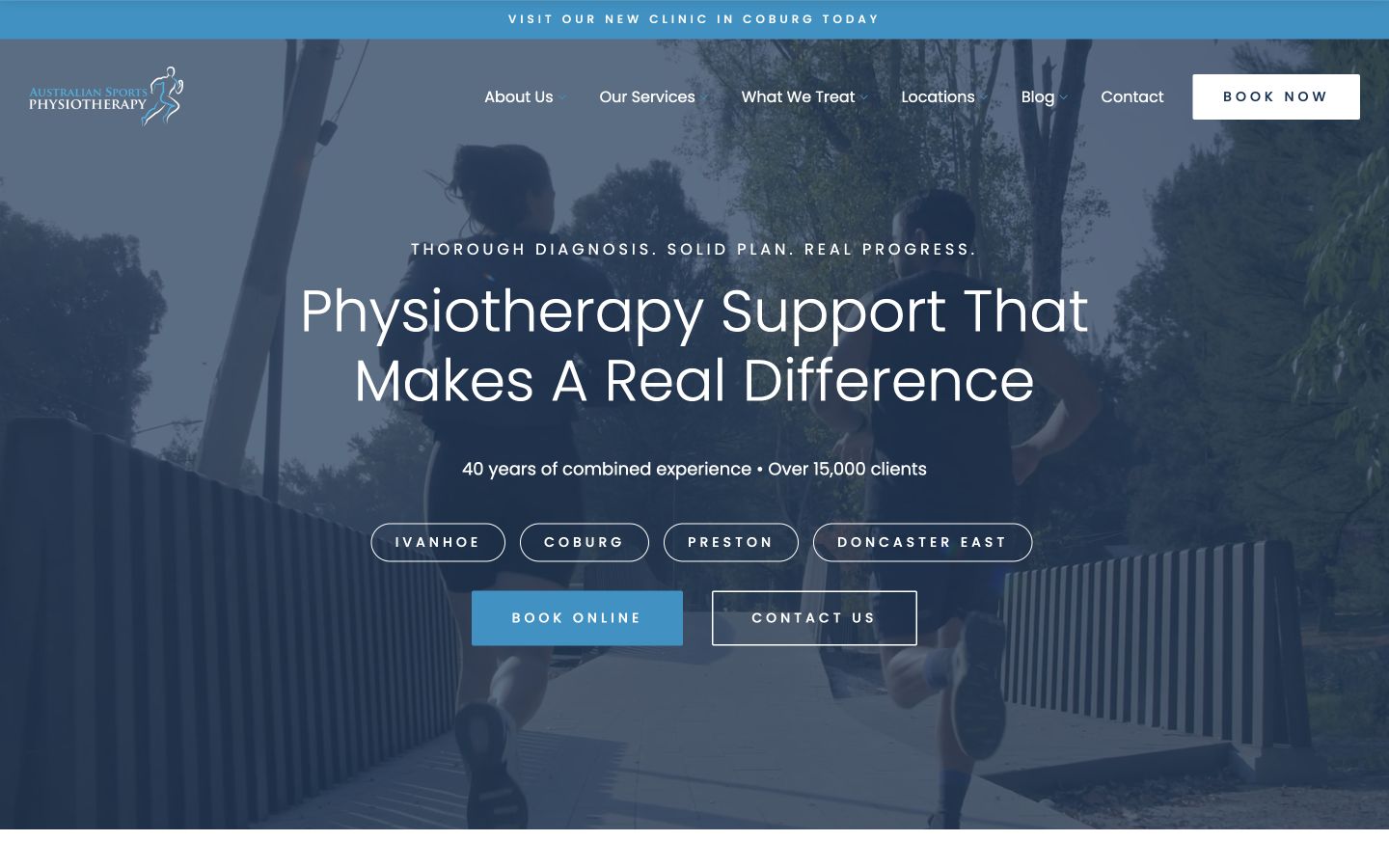
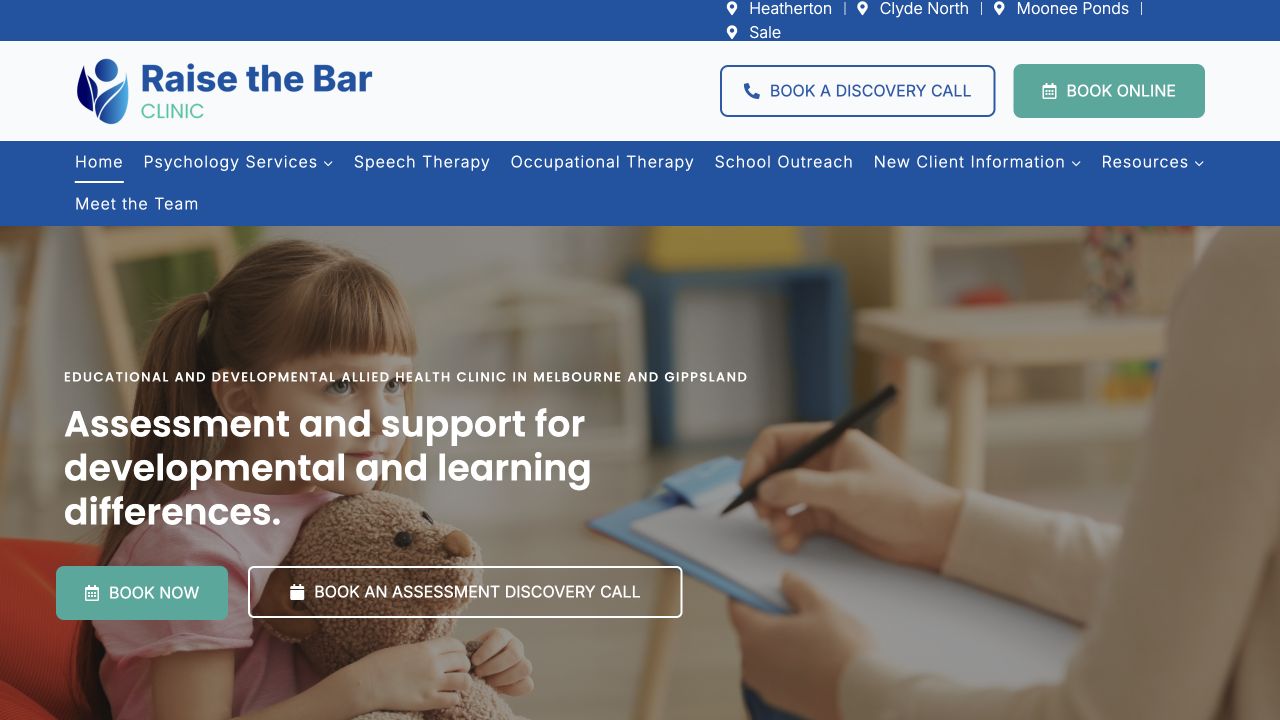
Real allied health websites, shown with the booking outcomes they helped support.
The Way Patients Choose a Podiatrist Is Shifting
A patient with a sharp pain under their heel used to type "podiatrist near me" into Google and compare the top few results. That behaviour is changing fast. More of them now open ChatGPT, describe the symptom in their own words, and ask what it might be and who they should see.
AI answers that question from what it can read across the web. Your website is the single biggest signal it has about what you do and how well you do it. If the AI can build a clear, confident picture of your practice from your site, it recommends you by name. If it cannot, it recommends someone whose site gave it more to work with.
This is a different game to ranking on Google. It is not about ten blue links anymore. It is about being the source an AI feels safe putting its name behind when a real patient asks for help.
Why AI Isn't Recommending Your Practice
AI can only recommend what it can verify. When your site describes podiatry in three short lines and a services list, there is almost nothing for it to hold onto. It does not know you offer shockwave therapy for stubborn plantar fasciitis. It does not know you handle diabetic foot assessments, paediatric gait analysis, custom orthotics, or ingrown toenail surgery. The knowledge lives in your head and in your consult room, not on the page, so AI treats your practice as a blank.
A brochure site fails this test completely. What surprises most practice owners is that a standard template build fails it too. A tidy template with a modern look and four thin pages gives AI just as little to reason about as the old site did. The design improved. The substance did not.
Depth is what changes the outcome. Every condition you treat, every service you offer, every question a patient asks you in the room, written out clearly and accurately, becomes something AI can read, trust, and repeat. That is the work most podiatry websites have never done.
AI Recommends Sources It Can Trust
An AI system will not stake its recommendation on a practice it cannot understand. It leans toward sources that are thorough, specific, and consistent, because those are the ones least likely to make it look wrong.
That is the opportunity. The more your website explains about the exact conditions you treat and the exact services you provide, the more confident AI becomes in sending patients to you. We build podiatry sites as a genuine knowledge source: dedicated pages for heel pain, plantar fasciitis, shockwave therapy, diabetic foot care, biomechanical assessment, orthotics, and paediatric podiatry, each written with real clinical substance and structured so machines and patients can both follow it.
There is a compliance angle here that matters. Adding this much content while staying inside AHPRA advertising rules takes care, and it is exactly where template sites and general web designers come unstuck. We write the depth AI rewards without the outcome claims and comparative language that get healthcare sites into trouble.
When You Get This Right, AI Does the Selling
Here is why this is worth the effort. A visitor who finds you through a Google search is still shopping. They landed on your site, they are comparing you to two others, and they might convert. Typically that is one, maybe two, in every ten.
A patient who arrives because AI recommended you is a different visitor entirely. The recommendation already did the convincing. They came to you because a source they trusted told them you were the right practice for their problem. That patient converts far higher, as much as one in two.
That gap is the whole argument for getting the website right. AI does the selling before the patient ever reaches you, but only if your site gave it enough to sell.
What's Included
Condition and service depth AI can read
Dedicated pages for heel pain, plantar fasciitis, shockwave therapy, diabetic foot care, orthotics, biomechanics, and paediatric podiatry. The detail AI needs to recommend you with confidence.
Structured for machines and patients
Schema markup, clean heading hierarchy, and clear internal linking so AI and search engines can parse exactly what you treat and how.
AHPRA-compliant depth
The volume of specific content AI rewards, written to stay inside advertising rules. No outcome guarantees, no comparative claims.
Mobile-first booking
Your practice management system wired in so a patient recommended to you books in under a minute on a phone.
See your mockup before you pay
We design the site first. You review it, request changes, then decide whether to proceed.
You own it, built to last
Built on a modern, high-performance stack, with no lock-in, and structured so it keeps giving AI more reasons to trust you as you grow.
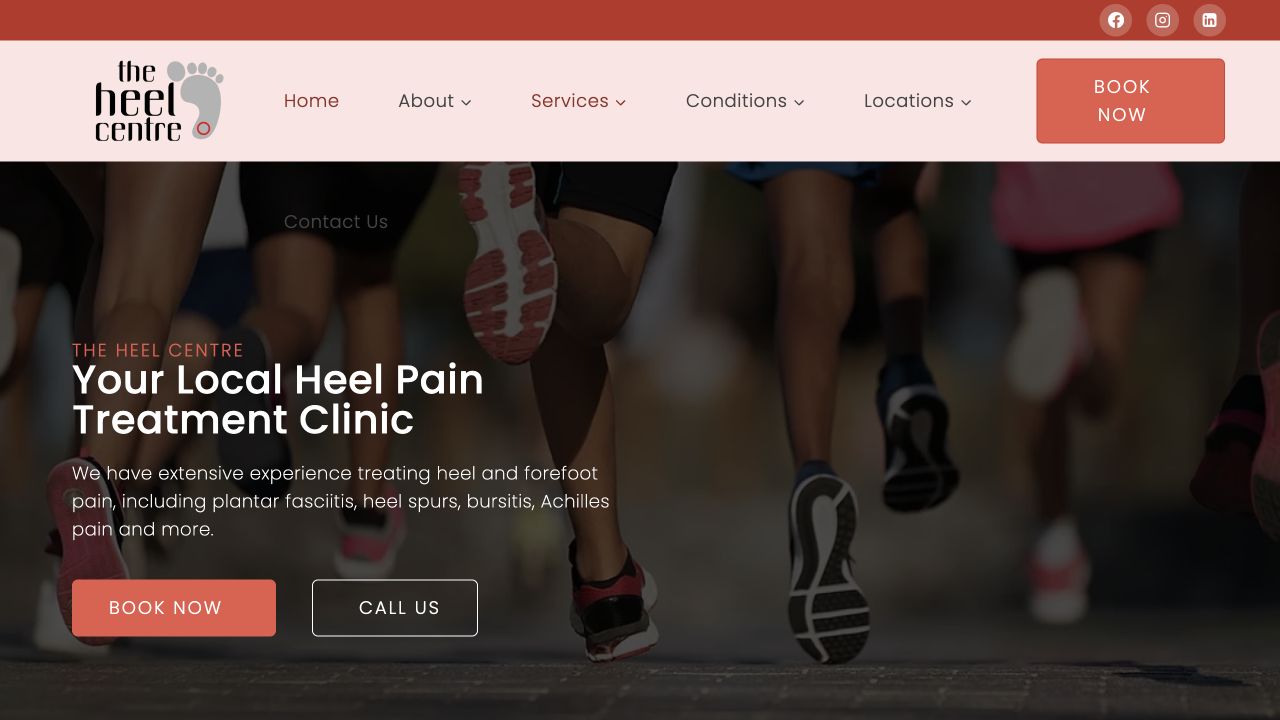
What a Website Built to Convert Did for One Podiatry Clinic
The Heel Centre came to us with a site that was not converting. Eighteen months later the picture had changed.
- Online bookings up 233% across 18 months
- Website conversion improved by 169%, making existing traffic work substantially harder
- Organic traffic up 177%, more of the right patients finding them
The website was the starting point. Everything else built on it.
How the Build Works
We build your AI Brain
We interview you and your team to capture how your practice actually thinks: your treatment philosophy, every condition you handle, and the way you approach each one, from shockwave therapy for chronic plantar fasciitis to how you manage a high-risk diabetic foot. All of it is structured into a knowledge base we call your AI Brain, and it becomes the source we train your content on, so the site reflects your clinic rather than a template.
We design your homepage mockup
You see the direction before you commit to anything. Look it over, and if you decide not to go ahead, there is nothing to pay, or your money back if you already have. Seeing it costs you nothing.
We generate the rest of the site
With your AI Brain and an approved homepage, we produce the content and design for every remaining page: each condition, each service, written with real depth and kept inside AHPRA rules. Live in under two months or your money back.
Go live and grow
Your site launches as a source AI can trust and recommend. When you want to add podiatry marketing across SEO, Google Ads, and local search, the foundation is already there.
Frequently Asked Questions
How does AI decide which podiatry practice to recommend?
It reads what it can find across the web and leans on sources it can verify. Your website is the strongest signal about your practice. The more clearly it explains the conditions you treat and the services you provide, the more confidently AI can recommend you when a patient describes their symptoms.
Isn't a modern-looking website enough for this?
A modern design helps patients, but AI reasons about substance, not styling. A tidy template with a few thin pages gives it very little to work with. The difference is depth: specific, accurate content on every condition and service, structured so AI can read it.
What does "condition and service depth" actually mean?
Instead of one general services page, your site gets real pages for heel pain, plantar fasciitis, shockwave therapy, diabetic foot care, orthotics, biomechanics, and more. Each is written with genuine clinical substance, so both patients and AI understand exactly what you handle.
Can you add that much content and stay AHPRA-compliant?
Yes, and that balance is the hard part most designers miss. We write the depth AI rewards while keeping every page inside AHPRA advertising rules: no outcome guarantees, no before-and-after framing, no comparative superiority.
Do you integrate with my booking system?
Yes. Cliniko, Nookal, and other practice management systems are standard. A patient recommended to you can go from landing on the page to a confirmed appointment in under a minute on mobile.
What happens once the site is live?
The website is the foundation and the source AI trusts. When you are ready to drive more patients to it, podiatry marketing adds SEO, Google Ads, and Google Business Profile on top of a site already built to convert.
See Your Podiatry Website Before You Spend a Dollar
A podiatry website deep enough for AI to trust and recommend. Every condition, every service, written with real substance and inside AHPRA rules, structured so AI sends patients your way. Live in under two months or your money back.
See your free mockup first. No obligation.